
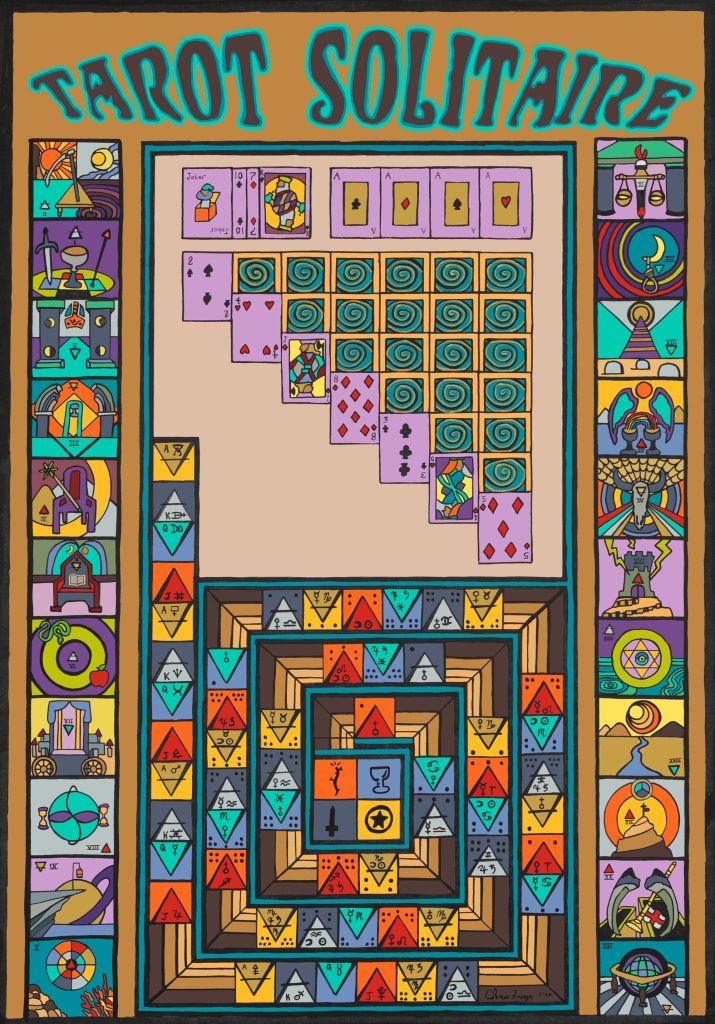
The fundamentals of Marketing across 26 tarot cards. Play a hand…
Topics:
marketing, market, segmentation, research, go-to-market, product-market fit, positioning, funnel, flywheel, mix, goals, strategy, execution, budget, brand, content, copywriting, storytelling, projects & initiatives, project management, agency, technology, automation, AI, analytics, metrics
Marketing with The Fool


If you have a product or service to sell in exchange for money, you’re in business. Marketing is all the different ways you attract an audience to your product or service. Two popular models explain how marketing interacts with the business:
The 7 Ps of Marketing
- Product: variety, colors, sizes, functionality, quality, design, packaging, features, services, guarantees, exchanges, support services
- Price: list price, discounts, bundling, credit terms, margin, cost-benefit
- Promotion: advertising, sales force, sales promotion, visual identity of product and categories, online content, publicity, press
- Place: physical or online trade channels, inventory, logistics, distribution
- People: the individuals behind the company, recruitment, company culture, training and skills, renumeration
- Process: how you meet customer expectations, tech support, design features, research and development, etc.
- Physical evidence: staff expertise, product packaging, promotional materials, online experience, social proof, reviews, testimonials
The 5 Cs of Marketing
- Company: your business in its entirety; what you sell, how you sell it, your niche, your differentiation, your competitive advantages (fixed, variable, and innovation), etc.
- Customer: the current and future people who will buy from you. The how, when, and why they purchase from you
- Competitors: your current and future competitors, their strengths and weaknesses, how you stand out from them, and the strategy to compete with them to gain market dominance
- Collaborators: all business partners and collaborators who have a shared interest in the growth of the business
- Climate/Context: political, economic, social-cultural, environmental, legal, and technological factors
Marketing is typically classified by who you’re selling to: a business selling to businesses (B2B), selling to consumers (B2C), or selling to customers directly (D2C), with other variations like B2B2B and B2B2C.
Market with The Magician

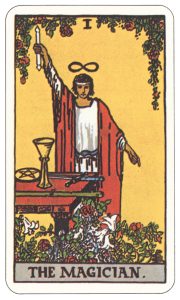
Marketing is all the different ways you attract an audience to your product/service. Market is the place where the product/service is purchased. A market can be a physical store. A market can be an online e-commerce store. Zooming out, a market can be thought of as the entire collection of all products and buyers (supply and demand). Sounds noisy – and it is.
Zooming back in a bit and segmenting, you can look at the market for specific products. As you continue to zoom in, you discover who is a good fit for your product. And to whatever degree you are successful selling your product(s) at the market, you have a position in the market vs. your competitors.
Marketing Segmentation with The High Priestess
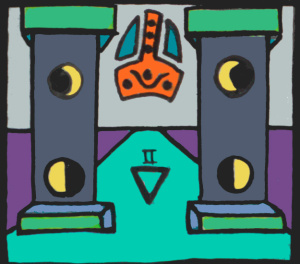

The market you are marketing to can be visualized and segmented in different ways for planning purposes. The TAM-SAM-SOM model is widely used and rightfully so – it shows how much opportunity there is at different stages of business growth. Framing each:
Total Addressable Market (TAM)
- The total market demand for your product. Knowing this helps you estimate your potential for growth (likely related to the company’s V𝘪𝘴𝘪𝘰𝘯)
- Formula: (# of customers in the market) x (annual value per customer ACV)
- Example: for a market of 5,000 customers at $500 ACV, your TAM would be $2.5M.
- Note: market research is likely needed to determine the # of customers in a market – this will be framed in tomorrow’s post!)
Serviceable Available Market (SAM)
- The portion of the market you can actually acquire based on your business model. Knowing your SAM helps you estimate targets for revenue and audience
- Formula: (% of your TAM that is a good fit for what you’re selling) x (ACV)
- Example: Say only 2,500 customers in your TAM of 5,000 live in the geographical area you are able to serve. This results in a SAM of $1.25M
Serviceable Obtainable Market (SOM)
- The demand for your specific product/service, taking into account the competitive landscape. SOM represents your opportunity in the market, more realistically. Knowing your SOM helps you estimate short-term growth.
- Formula: (last year’s market share) x (this year’s SAM) where last year’s market share equals last year’s revenue/last year’s SAM)
- Example: if last year’s SAM was $1.25M and revenue was $1M then last year’s market share was 0.8 or 80%. Plugging this into the formula and if this year’s SAM is $2M, then your SOM is (0.8) x ($2M) = $1.6M
What’s the bigger picture here? Well, marketing is an art and a science. Part of the art is placing bets on how you will attract an audience to your product. It’s likely that you’d want to place a majority of your betting money on your SOM, but also invest in your SAM and TAM.
Market Research with The Empress

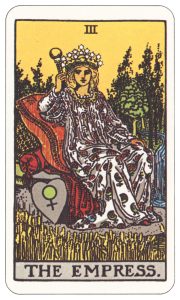
Now what about the idea of focusing your marketing efforts on your Serviceable Obtainable Market (SOM) – a segment of the market that’s a fairly accurate representation of the demand for your product and competition? Let’s call it your target market.
Here comes market research to really set you up for success. Depending on the degree you invest in it (there you go placing those bets again) and how well you utilize the insights, market research is a key enabler to knowing what your ‘marketing efforts’ should be. If you really understand your target audience, you can craft your product and the promotion of it to better appeal to them. This includes understanding their problems, their pain points, why they buy from you, why they buy from your competitor, or sometimes better yet – why they didn’t buy at all.
Kick off market research with defining your buyer personas. This is a fictional, generalized representation of your ideal customers which might take into account any or all of the following: age, gender, location, job title, family size, income, and major pain points. This is your initial best guess of your ideal customer. Over time you will refine it and perhaps discover that your business attracts several personas. Having persona(s) help you visualize how to streamline communications with your target audience.
Next, conduct market research with a representative sample of your target customers. Surveys, polls, and focus groups are all methods of gaining insights about your target customers. This kind of data gathering is called qualitative or primary research; it’s first-hand feedback and public opinion of your product vs. competitors. Data gathering of the quantitative/secondary type comes from public records, trend reports, market statistics, industry content, and any sales data you might have about customers and competitors.
Speaking of competitors, surely you want to identify them as part of your market research. You’ll likely know most of them, but to craft a thorough list, platforms like G2 Crowd can be leveraged, as well as market reports from companies like Forrester and Garnter which list industry leaders. Social media channels are also great directories. How’s your search game?
If your market research is effective, you will likely also uncover what is trending in your market and any unaddressed/underserved customer needs that can be leveraged into an opportunity.
Go-to-Market with The Emperor
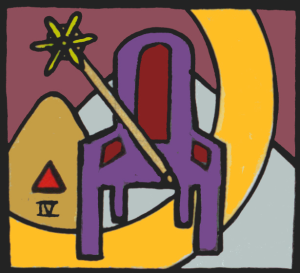
Go-to-market usually has the word strategy attached to it and condensed down to GTM strategy. Essentially, GTM is your step-by-step plan to develop your products, bring them to the market, and then promote them. The word strategy brings in the element of timing and suggests that the plan should be well calculated; representing a consensus among those involved in crafting it.
Your GTM strategy could be your plan to deliver your very first product to market, or it could be introducing a new product – perhaps one that was developed specifically for the trend or opportunity that was unveiled by your market research. Regardless, it relies heavily on your knowledge of your target audience and target market. Pricing, sales channels (where sold), and the buying journey (how someone goes from unaware to buyer) should all be mapped out in your GTM Strategy. Really, this goes back to the 7 Ps and 5 Cs of marketing. You’ll craft a solid GTM with those.
Product-Market Fit with The Hierophant


So we got our product to the market with our GTM strategy, which was informed by our market research, which was focused on our target customer and target market, which was determined by our TAM-SAM-SOM model. Whew! You built it and delivered it to the market, they will come now, right?
Enter: product-market fit (PMF) to determine if you are successful or not.
The creator of the concept is entrepreneur/investor Marc Andreesen who said ‘PMF means finding a good market with a product capable of satisfying that market’. That seems simple enough, right? Seems like if you are happy with the realistic revenue opportunity of your SOM (for now) and you brought a well-informed product to the market, then things should just work out from there, right? The key is customer satisfaction.
PMF is the scenario where target customers are buying, using, and telling others about your product in large enough numbers to generate sustainable growth. If customers aren’t satisfied, they won’t continue to buy and they surely won’t recommend you to others. The flywheel never gets going.
There is no universally agreed upon way to determine PMF but there is a popular rule and several metrics that can be key indicators:
- 40% rule: if at least 40% of surveyed customers indicate they would be “very disappointed” if they no longer had access to your product or service, you have PMF
- Metrics: renewal rate, retention rate, churn rate, net promoter score (NSP), customer lifetime value (CLV), customer acquisition cost (CAC), referrals
Depending on the type of product/service, PMF can be achieved over time by consistently receiving feedback from customers and iterating on the product until it can satisfy demand and activate growth.
Positioning with the Lovers

Positioning is one of my very favorite marketing topics. Not only do I love April Dunford’s work on positioning (2 books and a podcast), I also agree that it is the underpinning for all you do in sales and marketing – your entire business strategy really.
Positioning is context setting for products. Without context, products can be very difficult to understand – especially ones that are truly innovative. Consumers need to easily understand what your product/service is, why it’s special, and why it matters to them. Further, positioning defines how your product is the best in the world at providing some value that your target customers in your target market care a lot about. Good positioning will resonate with them and the situation they are in.
Positioning has 5 core components which should be considered:
- Competitive alternatives: what would customers do if you didn’t exist? You can’t position yourself until you know who you are positioning against.
- Unique attributes/differentiated capabilities: what can your product do that other’s can’t do?
- Value: customers might not care about a product’s features and capabilities. They care about the value that the product unlocks for them. This is the ‘so what’ of your product.
- Target market characteristics: your product is not a great fit for everyone. Figure out who really cares about your product’s value and focus your sales and marketing on them.
- Market category: the market you describe yourself as being a part of. This helps customers understand your value
- (Optional) Trends: any relevant trends that target customers might understand and find interesting that can help your product with relevancy
One of the fascinating things about positioning is that its 5 components all influence each other. This lends to the idea that positioning is not set in stone. It should be deliberately crafted, but then checked up on every 6 months or so. Markets change, the competition changes, company resources change, new opportunities arise. Further, since your position changes as you win markets and move to dominate other markets, your positioning should reflect that.
Marketing Funnel with The Chariot


Previously, go-to-market strategy, product-market fit, and positioning were framed as the plan to successfully bring your products to market, satisfying the demand of the market, and using messaging to put your products in the best frame of reference for target customers, respectfully. The marketing funnel builds on this.
The funnel represents the stages people move through on their ‘buying journey’. A quick Google search will show plenty of visuals, along with various names for each stage of the funnel. A traditional funnel that has an easy-to-remember acronym is AIDA: awareness, interest, decision, action. A potential customer first becomes aware of your product/service, then develops an interest in it, decides it’s valuable to them, and then takes the action to purchase, thus becoming a ‘customer’.
What are these TOFU, MOFU, and BOFU acronyms? More marketing lingo, yes, but they can be helpful for planning the tactics that you would execute to help prospects move through the funnel stages as efficiently as possible.
Top of Funnel (TOFU)
Touchpoints at the start of the journey where they become aware of your product/service, such as: commercials, digital ads, billboards, direct mail, online search, events, or even word of mouth.
Middle of Funnel (MOFU)
Touchpoints in the middle of the journey where they’re researching your product, what the competition is offering, and interacting with content from your brand such as email newsletters, webinars, podcasts, social media content, or product demonstration.
Bottom of Funnel (BOFU)
Touchpoints at the end of the journey as they develop intent and purchase your product. Influence to purchase usually comes in the form of free trials, promotions, limited time offers, trusted recommendations, and other social proof.
So the funnel is a useful way to visualize how folks go from unaware to customer and you can map out all the different touchpoints in the journey. Marketing is usually responsible for supporting top and middle of funnel while Sales supports the bottom. However – and this will be a major theme moving forward – marketing and sales should work together on the entire buying journey!
Which brings us to consider the customer journey not just as a funnel model where the end result is a customer, but as an hourglass model with accompanying stages for what happens post purchase: onboarding/activation, repeat purchase, loyalty, referral/endorsement, and into full on advocacy/evangelism.
Marketing Flywheel with Strength

The flywheel model shows marketing, sales, and service teams revolving around the customer, effectively working together to generate happy customers. After all, happy customers spread the word and feed the top of the funnel. They also provide the energy that spins the flywheel.
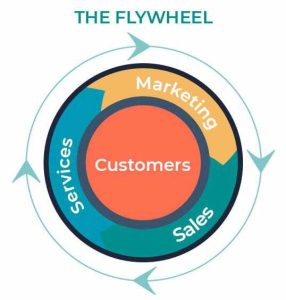
The flywheel model was unveiled by Hubspot in 2018 during their INBOUND conference. I remember it well because I was watching! A quick definition of a flywheel might be helpful: a flywheel is a machine that stores rotational energy. When you add energy to the flywheel, it starts to spin. Add more energy and it spins even faster. A flywheel keeps spinning unless an outside force slows it down.
For the purposes of the Marketing Flywheel model, rotations of the flywheel represents the growth of the business. So the goal would be to add energy to the flywheel and limit friction. Back to the TOFU, MOFU, and BOFU stages discuss prior, you’ll want to have content at each touchpoint of the buying journey. What would this look like?
Marketing Mix with The Hermit


Since the buying journey can be very complex with several touchpoints – especially in today’s digital age – the goal would be to distribute a mix of content and brand experiences across a mix of channels. This marketing mix would be informed by your market research so you know what channels your target audience uses to consume content. In other words, meet your customers where they are. Use the channels that they use. Offer them entertaining, educational, and engaging experiences that you know will resonate with them at a given stage in their buyer journey.
Examples of traditional marketing channels: billboards, TV and radio broadcasting, direct mail, telemarketing, newspaper/magazine/print
Examples of digital marketing channels: email, display ads, social media, website, search, podcasts, video, text, webinars
It’s harder to target and segment with traditional marketing, therefore making it harder to justify budget for it. The media can come with a level of refinement that makes it difficult or impossible to change or iterate on the fly. Digital marketing allows for better targeting and segmentation, along with easier iteration (a landing page can be changed instantly for example). However, since digital is easier to enter, it can be more competitive. It’s also highly dependent on technology which is constantly evolving and presents a challenge to keep up.
Marketing Goals with The Wheel of Fortune


Channel outreach should be informed by your market research and dependent on our business goals. A company can have a variety of different business goals: long-term revenue goals, short-term revenue goals, budget goals, product launch goals, social impact goals, philanthropy goals, etc.
Marketing, as a department and function within a company, will be a key contributor to the planning, strategy, execution, distribution, and hopefully realization of these business goals. That’s one of the awesome things about marketing – we contribute to the whole project lifecycle. Taking this point of view, the marketing team has goals and we also market business goals around the company to facilitate alignment and good process across the organization.
I’ve heard it on several marketing podcasts that I follow: “marketing is the leadership department”. What are your thoughts on that moniker?
Here’s a quick goal setting framework:
- Define your goal; where you are now and where you want to go
- Define a North Star metric that makes sense for the goal
- Define Objectives and Key Results (OKRs)* that support the North Star metric
- Meet weekly for status checks
- Meet quarterly to measure performance and set new goals for next quarter
*OKRs are helpful because it’s a way to track how well different teams are doing and contributing to hitting the main goal. Objectives are qualitative and Results are quantitative. For example, an Objective is to write an impactful social media series on marketing topics. KR1 might be to write and design the content, KR2 might be to collect 20 pieces of feedback, KR3 might be to get to 5,000 impressions.
Marketing Strategy with Justice


Let’s break it down:
Marketing is all the different ways you attract an audience to your offering.
Strategy is the plan and path you take towards reaching your goals.
So your marketing strategy is your plan and the steps you will take to attract your audience to purchase your product to reach your revenue goals (or other types of goals).
The planning and forecasting that is involved in setting the strategy is informed by many factors such as your market (customers and competition), your market research, your marketing mix, and even back to the 7 Ps of marketing. It’s also dependent upon the minds and experiences of those crafting it. Ideally, strategy represents a consensus of all the best minds in your company for how you are going to reach your goals in various ways. Strategy can be iterated on over time, or you can stick to the plan.
What’s the best marketing strategy? The true answer is it depends. It will always depend. It depends on you, your company, your market, your customer, your resources, your budget, and so many other things. You can observe how competitors and non-competitors approach their goals and factor that into your planning, but your strategy should always be about you.
Your story is unique. So too is your strategy.
Marketing Execution with The Hanged Man


A company has business goals. They develop a marketing strategy to plan and prioritize the course of action. That plan needs people. People execute the plan. Marketing execution is the thread that ties together goals, strategy, and people. It’s the processes and tools that people use to create and distribute content across channels. Monitor and measure the results. Then optimize and improve. Marketing Project Managers and Creative Operations Professionals are trained to oversee projects through strategy, execution, distribution, and continuous improvement.
Marketing Budget with Death


A quick definition of budget: a financial calculation plan, usually for the time frame of a month, quarter, or year.
A marketing budget is the sum of money that marketing gets from the company to run marketing projects, which are aimed at promoting the product and enabling sales.
Theoretically, you would use your budget to be successful at the outreach planned in your marketing mix which is guided by your marketing strategy. This would include headcount, tools, and advertising spend.
Marketing is like placing bets on where you think you can be successful. Spend the majority of your budget on those channels, but reserve a small portion for experimental projects, or projects that might be harder to measure return on investment (ROI).
Ideally you get to the point where you can predict that for every $X spent on marketing, you will get $Y in return. The desired ratio would be based on the marketing goals and greater revenue goals of the company.
Brand, Branding, and Brand Marketing with Temperance

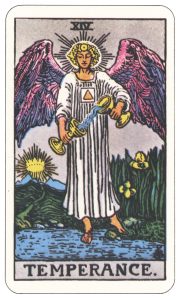
What do these terms mean?
They are often used interchangeably. Sometimes brand is used as an umbrella term to represent the result of everything an organization does; all communications to answer what, why, who, how, and when. Brand can also simply be thought of as the degree customers know, like, and trust you. Or even more simply: your reputation.
There’s lots of nuance but let’s give it a go:
Brand (Operational)
Purpose, promise, mission, vision, values, story, differentiators, products
What a business stands for, its reputation, and the emotions people associate with it.
Branding (Visual)
Logo, colors, fonts, imagery, graphics, tagline, packaging, website, social, advertising campaigns, marketing, communications.
Brand Marketing (Approach)
The strategic approach to promote products/services to highlight and elevate the brand as a whole. Likely a slow-drip strategy that is focused on telling the organization’s story to a target audience, clearly and consistently over time. Every touchpoint is an opportunity to fulfill brand promise.
One thing is for sure: brand is a long-term, sustainable, competitive advantage that’s very difficult to unseat. Products and features can be copied, but a brand can’t be.
A great driver of brand is being a trusted resource on a certain topic. Your channel outreach can be focused on the content that drives your expertise.
Content, Content Strategy, and Content Marketing with The Devil


Content. Content Marketing. Content Strategy. What do these terms mean?
Stripped back, content is messages, ideas, stories, words, and visuals.
In terms of marketing/business speak, content is what you put on your channels to educate, entertain, and engage your audience. Your audience being…well, anyone really. Prospects, leads, customers, loyal customers, employees, investors, etc.
If only you could put specific pieces of content in front of specific audience members, at specific times. Ah, but you can. You just have to figure it out and plan. That’s your content strategy.
Content Strategy, like all other types of strategy, considers your goals and maps out a plan to achieve them. Executing the plan comes down to talent and tools. That’s your content marketing.
A team of talented marketers and creatives will run programs and campaigns that offer valuable content to all stages of the funnel/flywheel, across a wide variety of channels. They use tools, tech, and data to execute efficiently and effectively.
Creative content, on the right channels, to the right customers. Now that’s Creative Operations.
Copywriting with The Tower

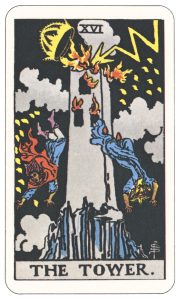
Copy is the text for an advertisement.
Copywriting is the process of writing persuasive marketing content.
Copywriters are the talented folks who creatively come up with the copy to persuade people to take action. Their work influences every touchpoint in the buyer’s journey from brand awareness to customer loyalty.
Shout out talented copywriters.
Shout out talented designers.
We all know that good marketing boils down to good copywriting and design.
If sales and marketing are aligned on the storytelling and copywriting of the product, you’re in good shape.
Storytelling with The Star

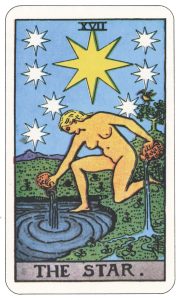
Storytelling is the basic human technology. It’s the primitive method we use to pass along wisdom. We’ve been doing it for thousands of years. Stories are memorable and they connect on psychological and emotional levels. Stories that resonate are usually about status, fear, or affiliation.
Brands use storytelling as a tool to tell their story, vision, and values in a way that resonates with their target audience. Effective storytelling can influence everything from purchase to customer loyalty. In this way, your story is your strategy.
The better you know your target audience the better you can craft stories that will resonate with them (see TAM-SAM-SOM and market research). People care about what’s in it for them and how the story aligns with them and who they are. They don’t care about product features; they care about the value those features unlock for them.
Next time you’re watching commercials, see how many of them elicit feelings of status, fear, or affiliation. It might be difficult to find one that doesn’t.
As brand builders and marketers, we also need to story tell internally to our organization as well. For example, if you know that an increase of X% in website traffic leads to an increase of $Y in revenue, then you make the case for your CFO to give you budget to invest in SEO. If you can tell the story effectively – again drawing on status, fear, or affiliation triggers – you are likely to influence.
Marketing Projects & Initiatives with The Moon

Are they the same thing/interchangeable, or is it one versus the other, or perhaps one and the other?
Starting with common definitions:
- Project Management Institute (PMI) defines a project as “a temporary endeavor undertaken to create a unique product, service, or result“
- Cambridge Business English dictionary defines initiative as “a new plan or action to improve something or solve a problem”
Both are focused on outcomes. The key difference is initiatives are more open ended while projects definitely have an end result. In this way, initiatives are a great precursor to projects. Initiatives are how organizations translate their mission and vision into a plan to hit goals. Projects, which are more operational, are how organizations execute on this plan. Projects break down the plan into actionable items and everyday tasks.
A complex strategic initiative likely consists of multiple projects and ongoing work. In this regard, executing on strategic initiatives is like managing a portfolio of projects.
Marketing Project Management with The Sun


The process of managing (marketing) projects so they’re successful is marketing project management.
A Marketing Project Manager owns this process of delivering successful projects, which directly impacts the success of marketing initiatives (which are ultimately linked to company revenue goals). In this way, a Marketing Project Manager is a common thread from strategy through execution – they must know about the strategic nature of the initiative so they can execute the project to the plan, successfully.
Marketing projects (like other types of projects) produce specific deliverables or pieces of work that are then used in marketing campaigns and programs. Marketing project deliverables tend to be creative and visual. Graphic designers, copywriters, and other talented creatives produce these types of deliverables and ensure they are ‘on-brand’. The Marketing Project Manager empowers these creatives by explaining the strategic vision of the project and then leads them through the work until the final deliverable is ready (successful marketing project execution).
Marketing Project Managers may be directed by the organization to use a certain process to manage projects, or they might create a customized process for the team. Either way, the process likely pulls from the fundamentals of traditional (waterfall) or agile project management. Each approach has nuance but largely follows these 5 process phases
- Initiating: define project, assess scope, initial resource estimates
- Planning: map out performance, milestones, deadlines, work schedules
- Executing: launch the project, onboard and empower resources
- Monitoring and Controlling: continuously check progress vs. the plan, change management
- Closing: acceptance of project deliverable, document performance and lessons learned
These process phases are outlined in the PMBOK Guide, a resource published by the Project Management Institute (PMI).
Marketing Agency with Judgement


Marketing agencies are teams of outsourced individuals who are contracted to create marketing deliverables and manage marketing processes.
Hiring a marketing agency is an option if you don’t have the in-house resources you need for the marketing activities you want to do. Since marketing agencies typically offer a wide-range of services, you can contract out for a specialized service or perhaps bundle certain services.
Marketing firms are similar, but are typically a smaller group of marketing professionals who are highly specialized and experts in certain marketing areas. Also offering similar services are: advertising agencies, creative agencies, and branding agencies.
Marketing Technology with The World

Marketing technology (aka MarTech) refers to the software tools that marketers use to optimize their marketing efforts to give them a better chance at hitting their objectives. Optimization is common marketing lingo.
When a marketing team uses many tools, it’s known as their MarTech stack. Roles like marketing operations, digital marketing, and marketing technologist are skilled at implementing, integrating, and managing a MarTech stack. A marketing agency can also be leveraged here.
Perhaps the most common MarTech tool is a customer relationship management (CRM) tool which provides a central place for the organization to store prospect and customer data and track interactions. This data can easily be pulled and shared across teams for the purposes of planning, strategy, and execution.
Other types of MarTech tools include email, advertising, analytics, content management, social media, team collaboration, automation, and AI. It’s estimated that there are more than 13k different MarTech solutions here in 2024.
Heard of the phrase cookieless future? With the growing focus on customer privacy and data security, multiple browsers like Safari and Firefox have been blocking third-party cookies for years. Google is set to restrict them completely this year. This trend pushes marketers and their organizations to rely on first-party data that they gather from direct interactions with customers on their apps and websites.
Marketing Automation with Solitaire

Marketing automation refers to software tools that automate repetitive tasks to free up time. Theoretically, this time saving allows marketers to focus more on strategy and crafting creative content that will more effectively engage their audience.
Consider the buying journey for a product. There are likely several touchpoints; viewing and clicking an advertisement, landing page experience, downloading content, email flows, social media, etc. Manually tracking behaviors across all touchpoints and channels is impossible. A marketing automation tool makes it possible. It allows a business to understand their customers’ needs and deliver the right content at the right time.
The key is thoughtful integration of the tool and being able to make changes to the automations as needed over time.
Marketing AI with Minor Arcana

AI (particularly generative AI) is perhaps the hottest topic in marketing right now. How to use it, when to use it, which tools, etc. And then there’s the unrest about it replacing marketers themselves.
Marketing is about creativity, empathy, and understanding human behavior. Humans possess the ability to do this. Generative AI can as well, to a degree. AI tools are only as good as the data you feed them so marketers need to get good at ‘teaching’ the AI tools they use; feeding them core brand content so the output is aligned with their marketing goals.
When utilized, AI tools help marketers with efficiency and productivity (just like any other tool). This time saving allows marketers to focus on strategy, iteration, testing, and optimization.
AI tools will continue to evolve. As of right now, marketers can use them for customer segmentation and targeting, predictive analytics, chatbots and virtual assistants, content creation, personalization, email marketing automation, social media management, advertisement targeting, voice search, speech recognition, and customer relationship management, to name a few.
You might be surprised by the AI tools you are already using. Every time you ask Siri a question, you are using AI. Netflix, Spotify, and other streaming platforms use AI algorithms to analyze your content consumption to recommend personalized content to you. Google Translate uses AI to perform language translations. Google Maps uses AI to suggest the most convenient route for your transportation method. Social media platforms use AI to curate your news feed with content.
Marketing Analytics with Elements

The terms marketing metrics and marketing analytics are sometimes used interchangeably, but they are different concepts. Marketing metrics are pieces of data in the form of numbers (values) that marketers track to determine the effectiveness of their campaign efforts. Examples of marketing metrics: email open rate, conversion rate, cost per lead, customer lifetime value, return on investment.
Marketing analytics is the information you extract from the metrics to evaluate performance and make decisions about future activity. It’s the study of the data. You can compare data sets against each other, compare metrics month over month, or year over year, for example. Marketing analytics software tools can help by collecting, organizing, and correlating the data so you can quickly and easily make optimizations.
Marketing Metrics with Aces
Marketing metrics are quantifiable values that can be tracked to determine campaign effectiveness. The metrics you want to track depends greatly on the type of campaign(s) you are running. Email marketing campaigns will have their own set of metrics. Digital ads will have their own set of metrics. Same with search engine optimization efforts, brand awareness efforts, and other customer engagements like social media. These all tie into the greater business metrics like return on investment, cost of customer acquisition, churn rate, growth rate, recurring revenue, and customer lifetime value.
Heard of pirate metrics? This refers to the AARRR metrics framework which maps to the marketing funnel: acquisition, activation, retention, referral, and revenue. Critical metrics indeed.
Continued Reading:
Project Superhero Monopoly
Comic book superheroes explain what it takes to run a project across the board.

Creative Operations Carnival
Find the formula, figure the field, finance the function, resource the role, and risk the responsibility.

Cohesive Storytelling
Shoots & Ladders
Who are you? What’s your story? How are you telling it? When and where? To who? Your story is your strategy.

Creative Positioning Fortune
Call on your four elements to creatively positioning yourself in the job market to stand out.

Clue to the
Messaging Suite
A creative framework for expressing your brand story, from essence to depth. Eight rooms await.
The imagery for Marketing Tarot Solitaire comes from my original artwork, Tarot Solitaire, produced in 2020.
🎟️ Book a Free Session
🪬 Explore Services
Leave a Reply